


Idle Theme Park Tycoon
4.131.09K Reviews
App Specs
- Version
- 9.4.0
- Updated On
- License
- Free
- Downloads
- 10,000,000+
- Developer
- Codigames
- Categories
- Simulation
- Platform
- Android
Screenshots
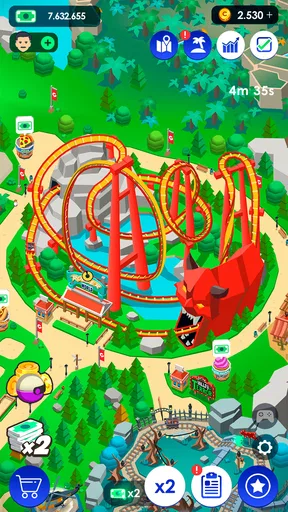
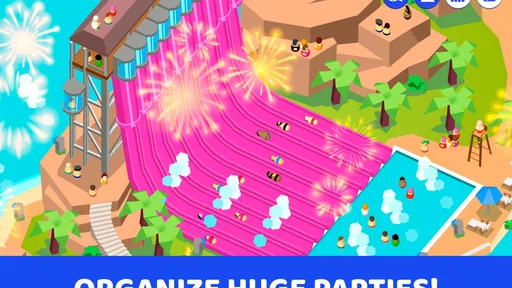
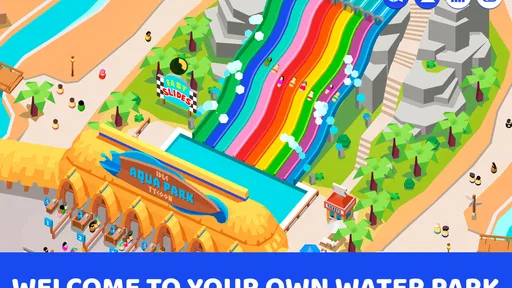

 Analysis by AppCompare
I enjoy Idle Theme Park Tycoon most when I treat it as a small project to check in on, rather than a game that needs my full attention for a long session. Its theme-park management setup gives each visit a simple purpose: collect progress, decide what to improve, and see how the park develops. That makes it an easy fit for short breaks, though the steady, incremental pace will not suit everyone.
Who will enjoy building a park
This is a good match for players who like watching a modest operation grow and making uncomplicated upgrade choices along the way. If you enjoy idle games, where progress continues around bursts of active play, the appeal is less about mastering complicated controls and more about choosing what deserves your attention next. The colorful park setting gives that familiar loop a lighter feel than a business simulator focused on spreadsheets or detailed logistics.
I would recommend it to someone who wants a casual management game they can return to without needing to remember a long chain of instructions. It is also a reasonable choice for a younger player: the game is rated Everyone, and its basic tap-led interactions are easy to understand. Adults who want intricate coaster design, realistic crowd simulation, or hands-on control of every park operation should look elsewhere; this is about gradual growth, not a deep construction sandbox.
A useful rhythm for everyday play
A realistic way to play is to check in during a coffee break, collect what has accumulated, and use that moment to decide whether an existing attraction or a new investment is the better next step. Then you can leave the park alone and come back later. That routine suits a busy day better than a game that expects constant attention, and it gives each short session a clear endpoint rather than encouraging aimless tapping.
One practical habit is to pause before spending every available bit of progress on the first upgrade you see. Look at the current task or goal, then compare it with the improvement you were already considering. If a mission is asking you to develop a particular ride, following that direction can make the next visit feel more focused; if it does not fit your plan, you can make a broader upgrade instead. The useful part is having a reason for the choice, not trying to find a supposedly perfect order.
Managers and automation change how the game feels as the park grows. They can reduce the need to revisit every section manually, but they also shift the emphasis away from hands-on operation and toward deciding where expansion is worthwhile. I see that as a sensible trade-off for an idle game: it makes a larger park easier to manage, while players who enjoy constant, detailed control may find that the game becomes less engaging as more work is automated.
Where it sits among simulation games
Compared with a traditional theme-park builder, this is a much lighter experience. A detailed builder usually appeals to people who want to lay out paths, design attractions, and solve practical problems across a carefully planned park. Here, the pleasure comes more from upgrades, income, and the sense of a small park turning into a larger enterprise. It is a better fit for someone who wants progression without taking on a complicated planning project.
Worth Reading Before You Choose

EA SPORTS FC Mobile 26 Is a Bigger Football Game, but It Takes Time

Flipboard Shows What News Apps Must Do Beyond the Feed

Switching to Android Auto Means Rethinking Your Driving Routine

Google Calendar Makes a Crowded Week Easier to Manage

Ludo King Makes the Most of the Minutes Between Plans

Baby Panda World Brings Quick Play to Modern Phones, but Its Game Library Feels Busy
It also differs from management games built around constant decisions and immediate consequences. The idle structure makes it easier to dip in and out, but it means the most satisfying choices are generally about what to improve next rather than reacting to a stream of detailed operational problems. If you want a game that rewards close attention every minute, a more hands-on simulation will likely be a better use of your time.
What to expect from the free-to-play model
The game is free to download, with optional in-app purchases priced from $0.99 to $129.99 per item. That wide range is worth keeping in mind if you share a device with a child or prefer to avoid accidental spending: check purchase settings before handing over the phone. I would begin without buying anything and see whether the natural pace feels enjoyable. Spending may appeal to players who value faster progress, but it is not necessary to understand the basic management loop.
As with many idle games, waiting is part of the rhythm. If you expect to unlock everything quickly or dislike progress that unfolds over repeated visits, the pacing may feel slow. I would not treat purchases as a fix for that mismatch; a game with more active challenges is likely a better choice if you want immediate, continuous action. The free option makes it easy to test whether the incremental style works for you before deciding how much time to invest.
First Impressions and Gameplay
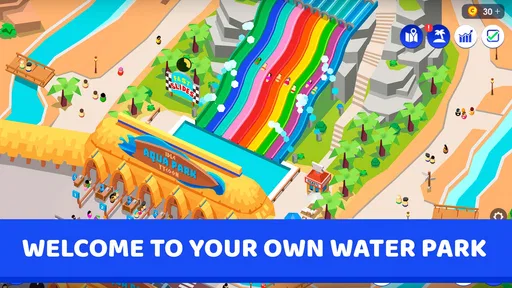
As soon as I launched Idle Theme Park Tycoon, I was greeted with vibrant graphics and a catchy soundtrack that set the tone for an engaging experience. The game kicks off by letting you manage a small, humble park. Your primary task? Transforming it into a bustling theme park empire.
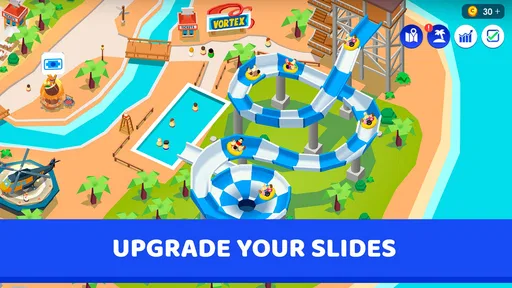
The gameplay is pretty straightforward, but that doesn’t mean it’s boring. You start with a couple of rides and attractions, and as you collect more money, you can upgrade these attractions or add new ones. What I love about it is the sense of progression. You can literally see your park evolve from a few rides to a sprawling entertainment complex.
Managing the park involves a lot of decision-making, especially when it comes to allocating funds. Do you upgrade the roller coaster or invest in a new food stall? These choices keep you hooked, as each decision impacts your park’s profitability and popularity.
Features That Stand Out
One of the key features that caught my eye is the automation aspect. As you progress, you can hire managers to take care of different sections of the park. This frees you up to focus on expansion rather than micromanaging every little detail. It’s a lifesaver when your park starts getting bigger.
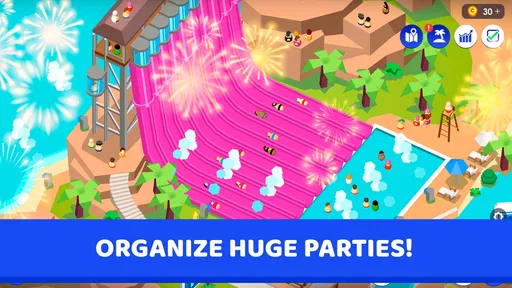
The game also offers various missions and challenges. Completing these tasks not only gives you rewards but also keeps the gameplay from becoming repetitive. There’s always something new to aim for, whether it’s hitting a certain income target or upgrading a specific ride.
Another cool aspect is the ability to unlock new islands. Once your current park is thriving, you can expand your empire to new locations, each with its own unique theme and challenges. This feature adds an exciting layer of strategy and exploration.
User Interface and Controls
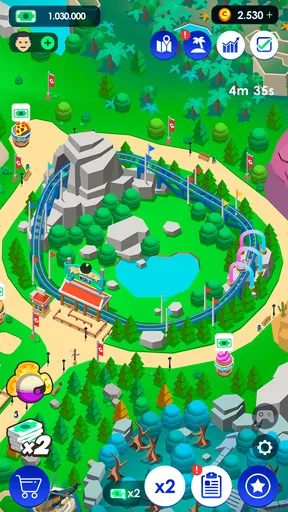
The user interface is clean and intuitive, which makes navigation a breeze. All the important controls are just a tap away, and the game provides helpful tips for beginners. Trust me, you don’t have to be a gaming pro to master this app!
The controls are primarily tap-based, which works perfectly for a mobile game. Whether you're upgrading a ride or collecting income, everything is a simple tap or swipe away. It's all about effortless management, which is just what an idle game should offer.
Monetization and In-App Purchases
Like most free-to-play games, Idle Theme Park Tycoon includes in-app purchases. However, I found that you can enjoy the game without feeling pressured to spend money. The in-game currency is earnable through regular play, and I never felt like I hit a paywall.
That said, there are options for those who want to speed things up. You can purchase additional funds or managers for a quicker progression. It’s optional, and I appreciate that the developers kept it fair for those who prefer to play for free.
Growth, updates, and returning players
The game is a simulation title from Codigames, and its current version is 8.5.0. It originally arrived on May 28, 2019, so it is not a brand-new release; it has had a long life on mobile. Those facts tell me this is an established game with a continuing version history, but they do not, by themselves, prove what any individual update changed. I would judge the current build by how its park-management loop feels now, rather than assuming that a version number guarantees particular new content.
For someone returning after a break, the most useful approach is to look at the goals currently presented in the game and use them to reorient yourself before spending resources. Missions can provide a practical reminder of what the game is asking you to work toward, while the park itself shows where your attention has been going. I would avoid making several big investments immediately after returning; a quick review of your existing attractions and objectives is a calmer way to pick up the thread.
There is a meaningful distinction between ongoing familiarity and a dramatic change in the core appeal. The park still asks you to invest, automate, and expand, so a returning player should expect the same broad idle-management style rather than a wholly different kind of simulation. That is reassuring if you liked the original loop, but it may disappoint anyone hoping a later version has transformed the game into a highly detailed builder. For existing players, the lasting value is more likely to come from continuing their park’s growth than from relearning an entirely new system.
Limits that matter before you commit
The simplicity that makes the game approachable also sets a ceiling on its strategic depth. Choosing between a ride improvement and another attraction can be satisfying, but it is not the same as designing a complex layout or balancing a web of interdependent systems. The missions add direction, yet players who want every session to present a fresh tactical puzzle may find the basic investment loop familiar after a while.
There is also a difference between visual growth and control. Watching the park expand gives a clear sense of progress, but a player who wants to customize every part of a theme park may not get the creative freedom they expect from the genre. I would choose this for relaxed progression, not as a substitute for a construction-focused simulator. That distinction matters more than the appealing setting: the game is about managing growth through accessible decisions, not recreating the full job of running a real amusement park.
It is available free, with optional purchases ranging from $0.99 to $129.99 per item. The game has an average rating of 4.1 from around 385,000 ratings, with about 31,000 written reviews and over 10 million installs. Those figures suggest that many players have tried it, but popularity cannot tell you whether its pace suits you. I would treat the no-cost start as a chance to test the core loop, and set a spending boundary before making any purchase, especially if children use the device.
What I would watch as a player
For a prospective player, the key question is whether the steady loop stays enjoyable: can you find satisfaction in returning, collecting progress, and making another measured investment? For someone already playing, I would pay attention to whether missions continue to give useful short-term aims and whether automation leaves enough decisions to keep the park interesting. These are practical ways to judge the experience for yourself without relying on assumptions about future updates.
On Android, the listed minimum operating-system requirement is version 7.0, which gives older compatible devices a clear baseline to check before installing. The game is rated Everyone, and that broad age rating makes it approachable for a family audience, though purchases are still worth securing through the device’s usual controls. It is also worth deciding in advance whether you want an idle game for brief check-ins or a more involved title for long sessions; the answer will shape whether this park feels relaxing or too hands-off.
Final Thoughts
Overall, Idle Theme Park Tycoon is a delightful escape into a world of fun and creativity. It’s perfect for those who love management games but don’t have the time for complex simulations. The graphics are charming, the gameplay is addictive, and the progression is satisfying. Whether you're a casual player or a theme park enthusiast, this game is sure to keep you entertained.
So, if you're ready to build your dream park, why not give it a spin? You might just find yourself hooked on the thrill of the ride!
Pros
- Engaging idle gameplay with minimal effort.
- Colorful graphics enhance user experience.
- Frequent updates with new content.
- Offline earnings keep progression steady.
- Simple mechanics
- suitable for all ages.
Cons
- Can become repetitive over time.
- In-app purchases can be expensive.
- Requires internet for some features.
- Ad frequency can disrupt gameplay.
- Limited customization options for parks.
FAQs for Idle Theme Park Tycoon
What is the main objective of Idle Theme Park Tycoon?
Idle Theme Park Tycoon is a simulation game where the primary goal is to build and manage your own theme park. Players are tasked with expanding attractions, improving services, and optimizing operations to maximize profits and ensure visitors have a fantastic experience. The game progresses even when you're offline, making strategic planning essential.
Is Idle Theme Park Tycoon free to play?
Yes, Idle Theme Park Tycoon is free to download and play on both Android and iOS devices. However, it offers in-app purchases for players who wish to enhance their gameplay experience. These purchases can include additional resources, unique attractions, and other premium features, but they are entirely optional.
What are the system requirements for Idle Theme Park Tycoon?
To run Idle Theme Park Tycoon smoothly, you'll need a device with Android 5.0 or later, or iOS 10.0 or later. Additionally, having a stable internet connection is advisable to access all features and updates. Devices with moderate processing power and RAM will ensure a better gaming experience.
How does the offline progress feature work in Idle Theme Park Tycoon?
The offline progress feature allows your theme park to continue generating income even when you're not actively playing the game. This feature is designed to help players build their parks without constantly being online. Upon returning to the game, you can collect the earnings and reinvest them to expand and improve your park.
Are there any social features in Idle Theme Park Tycoon?
Idle Theme Park Tycoon includes social features that allow you to connect with friends and other players. You can compare your progress, share achievements, and even visit each other's parks. These features enhance the social aspect of the game, making it more engaging and interactive.


